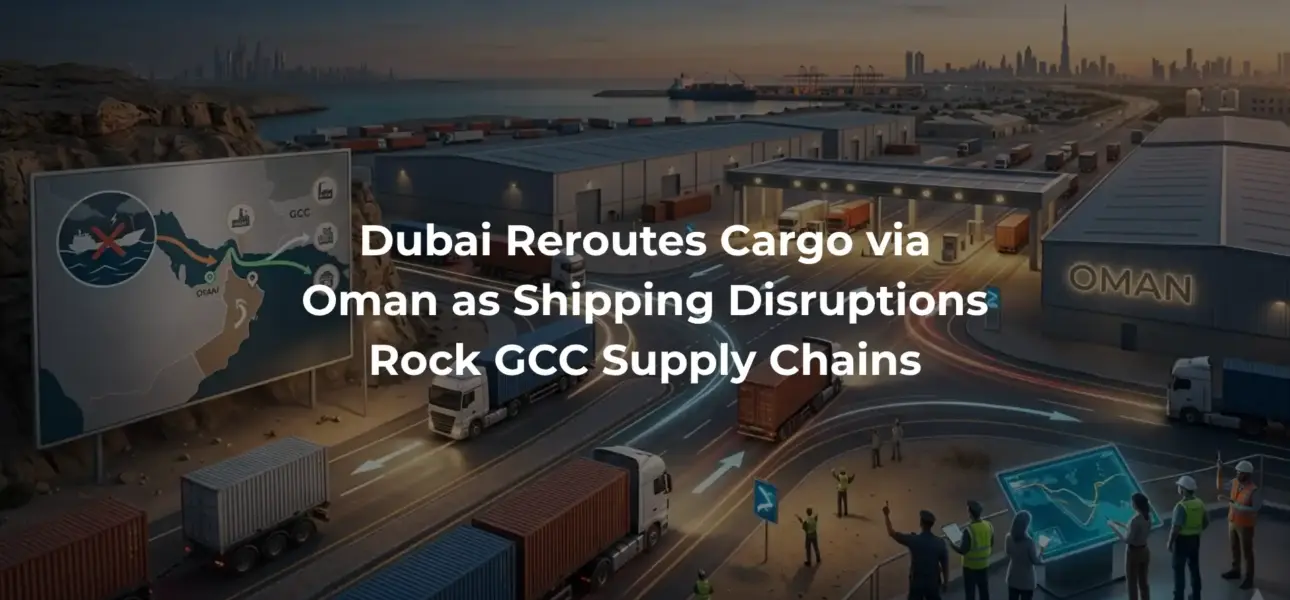
Dubai has taken decisive measures to keep goods flowing as major shipping disruptions hit supply chains across the Gulf Cooperation Council (GCC). In early April, Dubai Customs activated a temporary land corridor through Oman, rerouting cargo via the Hatta and Al Wajajah border crossings. This initiative allows goods arriving in Dubai including sea and air freight from free zones and local exporters to be transported by road into Oman and then shipped worldwide from Omani ports and airports.
Why This Is Happening
The move comes amid significant disruption in traditional maritime and air routes in the Gulf region, particularly linked to escalating geopolitical tensions affecting key chokepoints like the Strait of Hormuz. The strait normally handles around 20% of global oil trade and significant container traffic, but ongoing instability has forced carriers to avoid or suspend transits, affecting global supply networks.
Major shipping companies have been rethinking routes, and airfreight capacity has been constrained by Gulf airspace closures and cancellations.
What the Dubai Oman Corridor Does
The temporary corridor between the UAE and Oman streamlines cross‑border cargo movement, offering several advantages :
- Land transport via approved bonded operators moves containers across the border under customs supervision.
- Inspections at hatta and Al Wajajah ensure compliance while minimizing delays.
- Flexible financial measures such as waiving cash deposit requirements and accepting letters of guarantee for qualified operators help reduce bottlenecks.
This rerouting helps protect Dubai’s role as a global logistics hub and prevents major supply chain interruptions for key imports and exports from electronics to pharmaceuticals and foodstuffs.
Broader GCC Supply Chain Shifts
Dubai’s pivot is part of a larger regional response to supply chain pressures. Logistics networks across the GCC are adapting by
- Increasing dependence on road and multimodal transport corridors to move cargo between markets.
- Using alternative seaports and inland hubs in countries like Oman, Saudi Arabia, and even using Saudi Red Sea ports for some flows.
- Gradually restoring air cargo capacity as flights resume across the region, helping ease pressure on freight networks.
While these adjustments alleviate near‑term risks, longer transit times and higher logistics costs remain challenges for GCC trade partners and global shippers.
Frequently Asked Questions (FAQ)
Why is Dubai rerouting cargo through Oman?
Dubai is rerouting cargo to maintain supply chain continuity after disruption to key sea and air routes in the Gulf region, notably due to instability affecting the Strait of Hormuz. The land corridor via Oman helps bypass these bottlenecks and ensures cargo can still reach international markets.
What is the corridor?
The corridor is a temporary logistics framework between Dubai and Oman that allows freight to be transported overland under streamlined customs procedures. This includes bonded trucking through the Hatta and Al Wajajah border points and onward shipment from Omani ports and airports.
Which kinds of cargo are being rerouted?
Both sea and air freight handled in Dubai including shipments coming via free zones and local exports can be diverted into the Oman corridor. This includes containerized goods, perishables, and other commercial shipments.
How long will this rerouting last?
Authorities have described the arrangement as temporary, aimed at mitigating short‑term supply chain disruption. Its duration will depend on how quickly stability returns to traditional Gulf shipping and aviation routes .
What impact does this have on trade costs and delivery times?
Shippers may see higher transit costs and longer delivery times, as rerouting via land and alternative ports adds handling steps and distances. Additionally, global carriers have adjusted services and surcharges to reflect elevated risk and longer routes.
Are other GCC countries adopting similar measures?
Yes. Across the GCC, logistics providers are relying more on multimodal transport, road networks, and alternative maritime gateways to keep goods moving as routes through the Strait of Hormuz and adjacent airspace remain constrained.