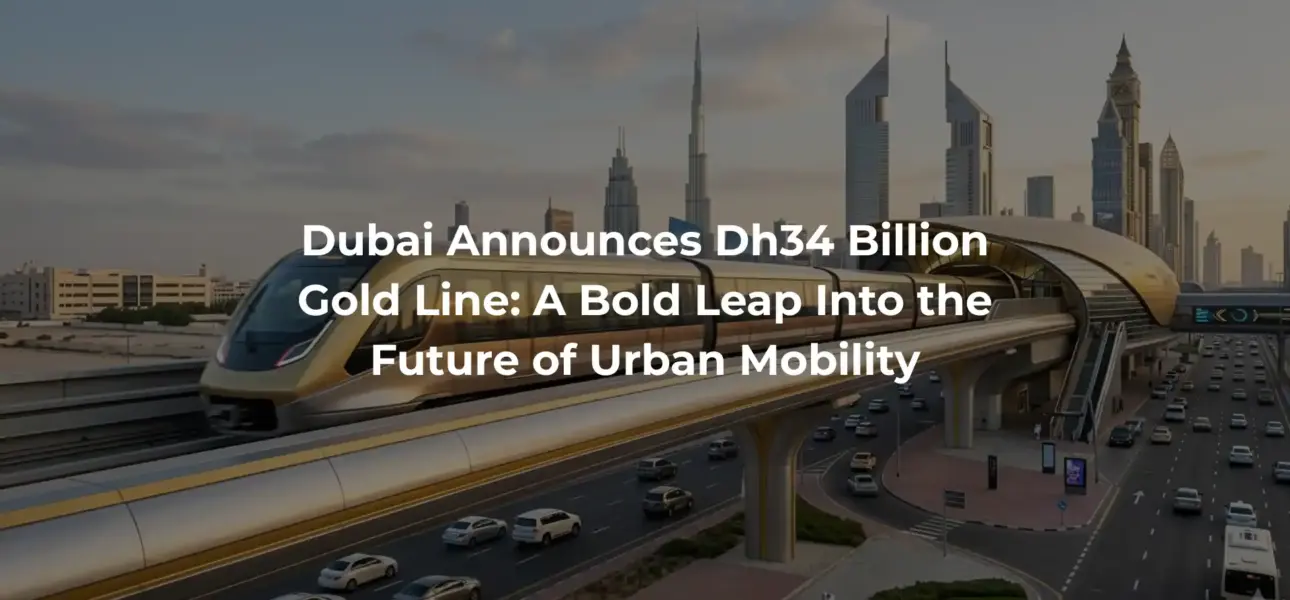
Dubai has once again reinforced its position as a global leader in innovation and infrastructure with the announcement of the Dubai Metro Gold Line, a fully underground rail network valued at Dh34 billion. Spearheaded by Sheikh Mohammed bin Rashid Al Maktoum, this ambitious project is not just about transportation it represents a long-term vision to redefine how people move, live, and invest in the city.
With Dubai continuing to grow rapidly in population, tourism, and real estate development, the Gold Line arrives as a timely solution to future mobility challenges.
A Fully Underground Network Designed for Efficiency and Speed
Unlike existing metro lines, the Gold Line will run entirely underground, making it one of the most advanced transport systems in the region. Spanning approximately 42 kilometres, the route will reach depths of up to 40 metres below ground, ensuring minimal disruption to existing infrastructure while maximizing efficiency.
This underground design is a strategic move it helps avoid traffic congestion, ensures faster travel times, and creates a more seamless commuting experience regardless of surface-level conditions.
It also positions Dubai alongside leading global cities that rely heavily on underground transit systems for efficient urban movement.
Connecting Key Areas Across the City
One of the most impactful aspects of the Gold Line is its ability to connect major residential, commercial, and developing zones across Dubai. The line will pass through 15 key districts, many of which are currently witnessing rapid growth and urban expansion.
By linking these areas directly, the project will significantly reduce travel time between communities, business hubs, and lifestyle destinations.
Even more importantly, the Gold Line will integrate smoothly with the existing Dubai Metro network, connecting with both the Red and Green Lines. This creates a unified transport ecosystem where commuters can switch lines effortlessly and reach their destinations faster.
Seamless Integration With Future Transport Systems
Dubai’s vision goes beyond just expanding its metro network. The Gold Line is being developed as part of a larger, interconnected transport strategy.It will connect with upcoming projects such as Etihad Rail, allowing passengers to travel between emirates more efficiently.This level of integration transforms the way people commute not just within Dubai, but across the UAE making public transport a more attractive and practical option compared to private vehicles.
Supporting 1.5 Million Residents and Future Growth
The Gold Line is expected to serve approximately 1.5 million residents, making it a critical addition to Dubai’s infrastructure.It will also connect to over 50 major real estate developments, many of which are currently under construction or in the planning phase. This means the metro line is not just supporting today’s population it is being built with future communities in mind.As Dubai continues to expand outward, having a reliable and efficient transport system becomes essential to maintaining quality of life and economic growth.
Major Expansion of Dubai’s Metro Network
With the introduction of the Gold Line, Dubai’s metro network will undergo a significant transformation.The total network length will increase by more than 30%, expanding from around 120 km to 162 km, while the number of stations will grow from 67 to 85.This expansion will bring more areas within walking distance of a metro station, making public transport accessible to a larger segment of the population.
Timeline and a Symbolic Completion Date
The project is planned in carefully structured phases to ensure smooth execution. The tendering process is expected to begin in 2026, followed by contract awards in 2027.The targeted completion date is September 9, 2032 a date chosen deliberately to reflect Dubai’s iconic 09.09.2009 metro launch.This symbolic alignment highlights the city’s commitment to continuing its legacy of transformative infrastructure milestones.
Advanced Engineering and Smart Technology
The Gold Line will incorporate cutting-edge engineering techniques, including advanced tunnel-boring technology that allows for deep underground construction with high precision and safety.Beyond construction, the system is expected to feature smart technologies that enhance passenger experience, improve operational efficiency, and reduce environmental impact.This aligns with Dubai’s broader goal of becoming a smart and sustainable city, where technology plays a key role in everyday life.
A Major Boost for Real Estate and Investment
Infrastructure development and real estate growth go hand in hand in Dubai, and the Gold Line is set to play a major role in shaping the property market.
Areas connected by metro lines traditionally experience:
- Higher property value appreciation
- Increased rental demand
- Greater investor interest
With the Gold Line connecting dozens of new and existing developments, it is expected to unlock new opportunities for both investors and end-users.
For real estate companies and buyers, this project signals long-term growth potential in emerging locations across the city.
Enhancing Lifestyle and Daily Convenience
Beyond economic impact, the Gold Line will significantly improve everyday life for residents.
Shorter commute times mean more time for family, work, and leisure. Easy access to business districts, shopping destinations, schools, and healthcare facilities enhances overall convenience.
It also encourages a shift toward public transport, reducing reliance on cars and contributing to a more sustainable urban environment.
Aligning With Dubai’s 2040 Urban Master Plan
The Gold Line is closely aligned with the Dubai 2040 Urban Master Plan, which focuses on sustainable growth, improved connectivity, and enhanced quality of life.
The plan aims to create a city where infrastructure supports both economic expansion and community well-being and the Gold Line plays a central role in achieving that vision.
FAQs
What makes the Dubai Metro Gold Line different from existing metro lines?
The Dubai Metro Gold Line is designed as a fully underground network, unlike parts of the current metro system. It focuses on improving speed, efficiency, and reducing surface congestion. The line connects key districts and upcoming developments across the city. It also integrates with other major transport systems for seamless travel.
Why is the Gold Line considered a major infrastructure project?
The Gold Line is considered major due to its Dh34 billion investment and large-scale engineering complexity. It spans 42 kilometres entirely underground using advanced construction technology. It is designed to support Dubai’s long-term population and urban growth. The project is also part of the city’s futuristic mobility vision.
How will the Gold Line improve daily commuting in Dubai?
The Gold Line will make commuting faster and more convenient across major areas of Dubai. It will reduce travel time between residential, business, and leisure districts. People will have a reliable alternative to road transport and traffic delays. Overall, it will improve the daily travel experience for residents and visitors.
Which areas will benefit the most from the Gold Line?
The line will pass through around 15 key districts across Dubai, covering both established and developing areas. It will connect major residential communities, business hubs, and upcoming real estate projects. This ensures balanced development across the city. Both current and future neighborhoods will benefit from improved accessibility.
How will this project impact Dubai’s real estate market?
The Gold Line is expected to significantly boost real estate activity along its route. Properties near metro stations usually see increased demand and value appreciation. The project connects more than 50 major developments across Dubai. This creates strong investment opportunities for both buyers and investors.
Will the Gold Line help reduce traffic congestion?
Yes, the Gold Line will help reduce traffic by encouraging more people to use public transport. With faster and more efficient underground travel, dependency on private vehicles will decrease. This will ease pressure on major roads and highways. It contributes to a smoother and more sustainable traffic system.
Is the Gold Line part of Dubai’s long-term development plan?
Yes, the Gold Line is aligned with Dubai’s long-term urban development vision. It supports goals related to sustainability, smart mobility, and city expansion. The project is part of the wider strategy to improve connectivity and quality of life. It plays a key role in shaping Dubai’s future infrastructure.
When will residents start seeing benefits of this project?
While full completion is expected in 2032, the development process will bring gradual progress over time. Early construction phases will already influence urban planning and investment activity. As the project develops, surrounding areas will see increased interest. The complete operational benefits will be visible after launch.