
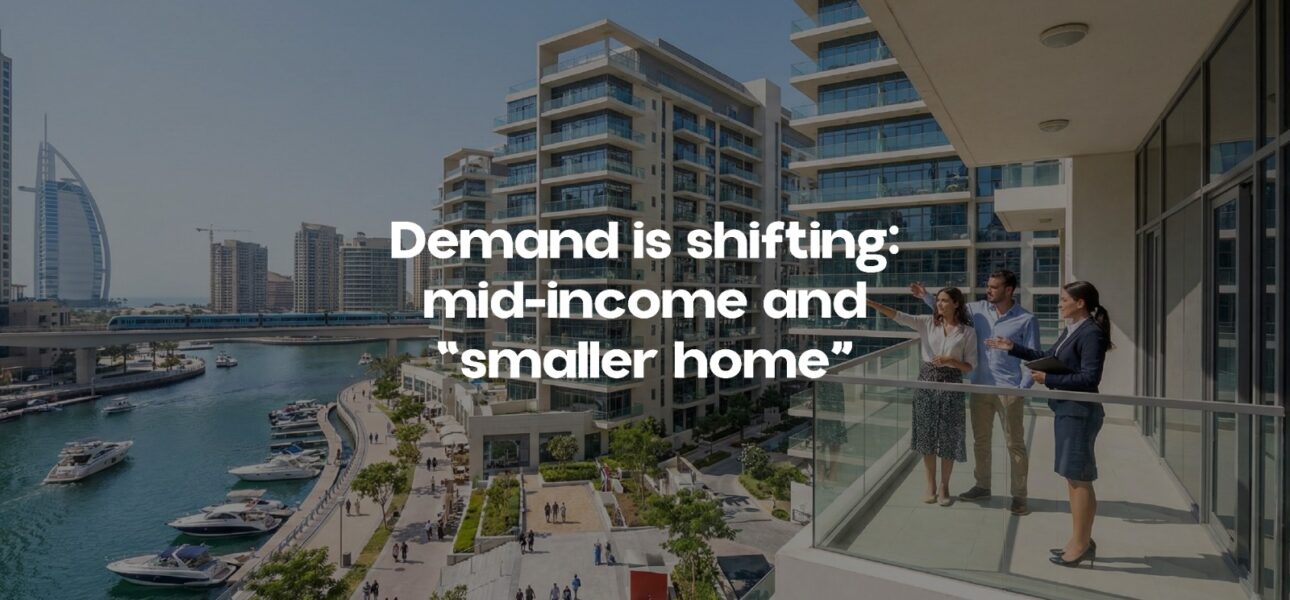
Dubai’s property market is in the middle of a major transformation. For years, the spotlight was on luxury villas, premium penthouses, and high-end waterfront residences. But recent trends show a noticeable shift: mid-income buyers and compact homes are now driving a large share of the market’s growth. This signals a more sustainable and accessible property cycle, powered by real end-users rather than just high-net-worth investors.
One of the key reasons behind this shift is affordability. With living expenses rising and economic conditions stabilising post-pandemic, many residents prefer properties that offer value without compromising on lifestyle. Well-planned studios, 1-bedroom, and 2-bedroom apartments have become the most searched categories, making apartments the new backbone of Dubai’s sales volume.
Another major factor is population growth. Dubai continues to attract professionals, entrepreneurs, and job-seekers, especially in tech, finance, hospitality, and healthcare. These individuals typically fall into the mid-income bracket and prioritise functionality, accessibility, and community living. As a result, demand for moderately priced homes in well-connected neighborhoods is at an all-time high.
Developers are quickly responding to the shift. New project launches increasingly focus on compact layouts, competitive pricing, and flexible payment plans. Communities such as JVC, Dubai South, Dubailand, and Arjan are gaining popularity because they offer modern amenities without luxury-level price tags. This aligns perfectly with the needs of young families, first-time buyers, and long-term residents who prefer smart investments.
In addition to affordability, lifestyle preferences are evolving. Today’s buyers value convenience: proximity to schools, healthcare, public transport, and retail options are top priorities. Smaller homes located within master-planned communities deliver this convenience while keeping costs manageable. Many of these developments also offer pools, gyms, coworking areas, and parks — features that used to be associated only with luxury properties.
The rental market further supports this trend. With high rental yields for apartments and strong tenant demand, mid-income buyers see smaller units as a strategic investment. Short-term rentals, particularly in central zones and tourist-friendly areas, also make compact homes a profitable choice. This keeps investor interest strong even as end-user demand rises.
Most importantly, this shift reflects the maturing of Dubai’s real estate sector. A market dominated only by luxury sales can fluctuate. But when mid-income buyers and residents actively participate, the market becomes more stable, more diversified, and more future-ready. It shows that Dubai is evolving into a city where long-term residency and attainable homeownership are becoming increasingly realistic.
Overall, the rise of mid-income buyers and smaller homes marks a new era for Dubai’s property landscape — one that focuses on accessibility, practicality, and sustainable growth. As developers adapt and buyers continue prioritizing value, this segment is expected to remain a strong driver of the market in the coming years.